The Rise of TSN in Factory Automation and Industrial Ethernet

TSN changes industrial Ethernet by adding deterministic timing to standard switches. This shift reduces reliance on proprietary fieldbus for critical control. Buyers should plan for network segmentation, switch upgrades, and new design practices.
- TSN makes standard industrial Ethernet suitable for hard real-time control by adding time-aware switching.
- Factory network design is moving from simple segmentation toward precise scheduling and traffic management.
- Buyers should evaluate switch capabilities and cable standards before committing to TSN deployments.
- A hybrid approach is common, running TSN for motion control and legacy protocols for legacy equipment.
- Preparation requires updating network documentation, testing timing behavior, and training maintenance staff.
Time-Sensitive Networking in Industrial Automation
Time-Sensitive Networking is moving from pilot projects to core production lines. The shift is driven by a simple need. Modern plants run more sensors, actuators, and vision systems than legacy fieldbus topologies can handle. Standard industrial Ethernet connects these devices but often struggles with jitter. TSN changes that by treating time as a first-class parameter in network design.
This is not a new protocol. It is a set of enhancements to how industrial Ethernet switches handle packets. When a motion controller sends a position update, TSN ensures that packet reaches its destination within a predictable window. This allows factory automation engineers to use familiar Ethernet tools for deterministic tasks. The result is a flatter network architecture that is easier to scale and maintain.
Why TSN Matters for Deterministic Communication
Traditional industrial Ethernet was designed for data, not control. A packet might arrive in the expected order, but the exact millisecond of arrival varied. For supervisory systems or historical data logs, that jitter is acceptable. For closed-loop control, it is not.
TSN addresses this through time-aware switching. The network schedule is built before traffic starts. Each switch port knows when to forward a specific flow and when to drop everything else. This creates a deterministic path for control traffic. It is similar to how a traffic light manages cars, but for data packets.
The benefit for buyers is architectural simplification. You can run higher bandwidth services over the same physical wires. A single industrial Ethernet segment can carry both high-speed vision data and low-latency servo commands. This reduces the number of physical layers and the complexity of the overall network design.
In a typical plant, a legacy fieldbus might connect a drive to a controller. The drive sends speed and position data every millisecond. The controller processes this and sends a new setpoint back. If the network adds even a few microseconds of delay, the drive may miss its target. With TSN, the network guarantees that the round trip stays within a strict budget. This allows engineers to use high-speed Ethernet cables and switches that are cheaper and more available than specialized fieldbus hardware, while still meeting tight control cycles.
Five Shifts Buyers Should Plan For
The adoption of TSN requires changes in how plants are designed and managed. These are not theoretical shifts. They affect procurement, engineering, and daily operations.
-
Segmentation Becomes Scheduling
In older designs, you segmented traffic by VLANs. Now, you segment by time windows. A single switch may serve multiple TSN streams with different deadlines. Network engineers must define these deadlines and test them. For example, a robot arm might require a 1 millisecond deadline for position data, while a temperature sensor might tolerate 100 milliseconds. The switch must schedule these flows independently. If the temperature sensor traffic overlaps with the robot data during a burst, the switch must drop or delay the sensor traffic to protect the robot. This requires careful network planning during the design phase, not after installation. -
Hardware Requirements Change
Not all industrial Ethernet switches support TSN. You need hardware that can process time-stamped packets quickly. Many older switches can handle basic time-aware routing, but advanced features like Precision Time Protocol synchronization require newer chips. When selecting equipment, verify that the switch supports the specific TSN features you need. For instance, if you require hard real-time guarantees, ensure the switch supports Time-Aware Shaping and Guard Bands. Standard industrial Ethernet switches may support basic Quality of Service, but they do not provide the deterministic timing required for high-speed motion control. -
Cabling Standards Matter More
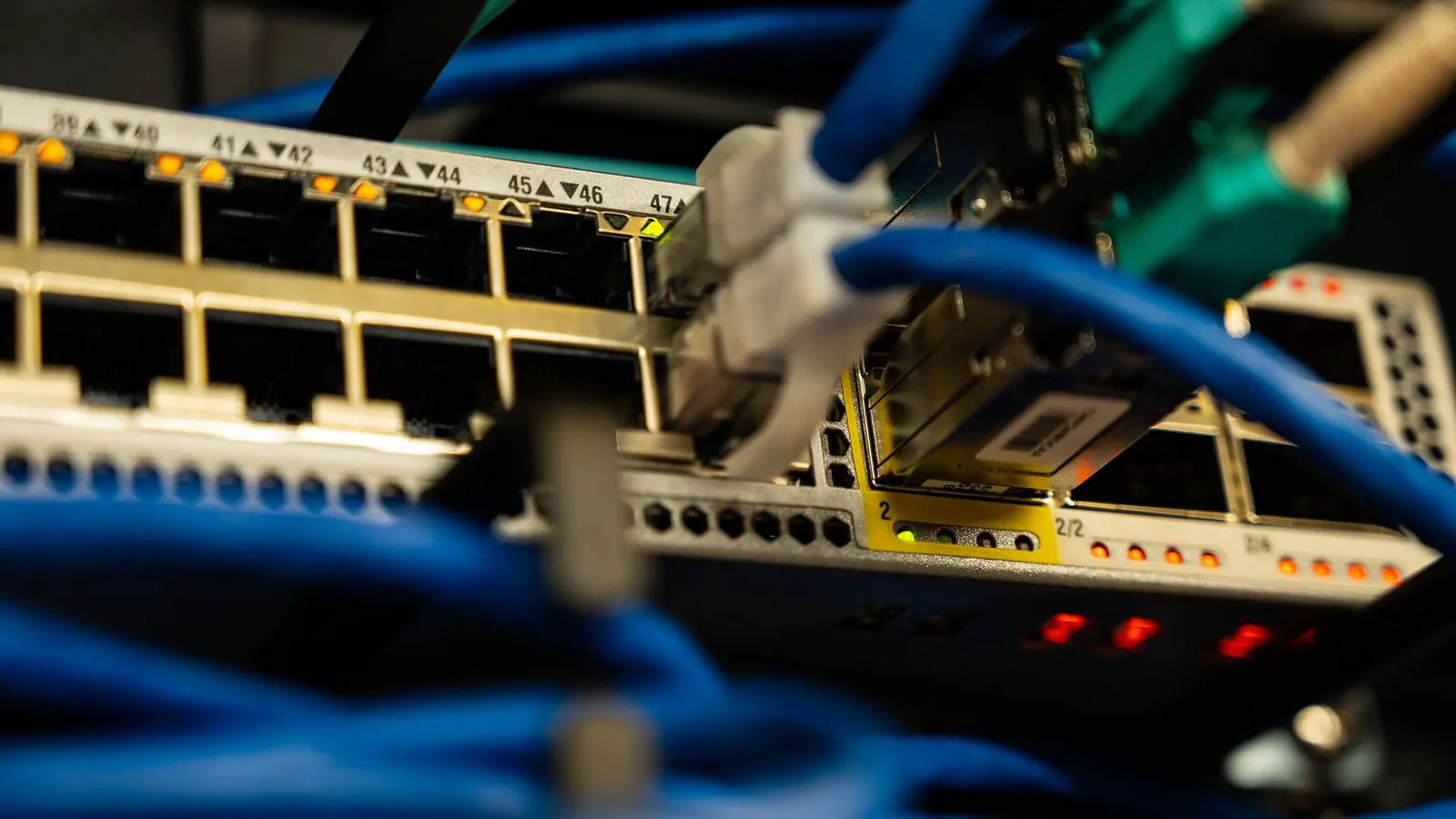
TSN is sensitive to cable quality. A degraded cable can introduce jitter that defeats the purpose of the technology. Buyers should verify cable certifications and inspect connectors during installation. Use Category 5e or Category 6 cabling that is certified for industrial environments. Avoid long runs of unshielded twisted pair in areas with high electromagnetic interference. If you must use fiber for long distances, ensure that the fiber optics are paired with industrial-grade transceivers that support time-sensitive features. A single bad connector can cause packet retransmissions, which add latency and break the deterministic path. -
Maintenance Staff Need New Skills
Troubleshooting a TSN network is different from troubleshooting a standard Ethernet network. Issues might not show up as packet loss. They appear as missed deadlines. Technicians need tools to visualize timing behavior. Standard network analyzers show throughput and error rates, but they do not show if a packet arrived 50 microseconds late. You need specialized tools that can inspect timestamps and monitor the timing behavior of specific flows. This requires training for your maintenance team. They must understand how to interpret timing diagrams and how to adjust network parameters when a deadline is missed. -
Hybrid Networks Are the Norm
Most plants will not replace all fieldbus with TSN. You will run TSN for new motion control and legacy protocols for existing machines. The network must support both simultaneously without interference. This creates a complex environment where different timing requirements coexist. You must design the network to isolate TSN traffic from legacy fieldbus traffic where possible, or use hybrid switches that can handle both protocols on the same physical layer. This requires careful planning to ensure that legacy devices do not introduce jitter that affects TSN flows.
How TSN Works in an Industrial Ethernet Topology
To understand TSN, you need to look at how packets flow. The process starts at the source device. The controller stamps the packet with a timestamp. It also adds a deadline field, which tells the network how long the packet has to travel.
As the packet moves through switches, each one checks the timestamp. If the packet is on schedule, it is forwarded immediately. If the packet is behind schedule, the switch may prioritize it over other traffic. If the packet is late, the switch might drop it.
The network also uses Precision Time Protocol to sync all clocks. This allows every switch and device to agree on what “now” means. Without synchronized clocks, the deadline calculations fail. The result is a network where timing is predictable and measurable.
In practice, the controller sends a packet with a timestamp of 10.000 milliseconds. The switch receives this packet at 10.001 milliseconds. The switch knows that the packet has a deadline of 10.010 milliseconds. The switch forwards the packet to the next switch port at 10.002 milliseconds. The next switch receives it at 10.003 milliseconds and forwards it at 10.004 milliseconds. The final device receives the packet at 10.005 milliseconds. This is well within the deadline. If any switch delays the packet by more than 5 microseconds, the deadline is missed, and the device may not receive the data in time for its control cycle.
A Practical Comparison of Network Approaches
The table below compares how different network approaches handle timing. This helps buyers understand where TSN fits relative to older methods.
| Network Approach | Timing Behavior | Typical Use Case | Hardware Complexity |
|---|---|---|---|
| Legacy Fieldbus | Fixed slots, high latency | Simple machines | Low |
| Standard Industrial Ethernet | Variable latency | Data collection | Low |
| TSN | Deterministic, low latency | Motion control | High |
| Hybrid TSN/Fieldbus | Mixed timing behavior | Mixed environments | Medium |
Standard industrial Ethernet is fast but not deterministic. Legacy fieldbus is deterministic but slow. TSN combines the speed of Ethernet with the predictability of fieldbus. This makes it suitable for complex lines with many interconnected devices.
For example, a legacy fieldbus might have a maximum data rate of 10 Mbps and a fixed slot size of 1 millisecond. This is sufficient for a simple motor control loop, but it cannot handle the data rate of a high-speed camera. Standard industrial Ethernet can handle the camera data, but the timing is not guaranteed. TSN allows you to run the camera data and the motor control loop on the same Ethernet segment, with the motor control loop having a guaranteed timing path.
Preparing Your Factory Network Design
Preparation starts with a clear understanding of your timing requirements. Not every process needs TSN. A data historian does not need the same precision as a robotic arm. Identify which parts of the plant need deterministic communication.
Next, map your existing network. Identify which switches are old and which are upgradable. Some vendors offer firmware updates that add basic TSN features. Others require new hardware. Check the physical layer as well. Copper cabling is generally better for TSN than older fiber variants, but fiber is still used for longer runs.
Update your network documentation. A TSN network has more variables. You need to record clock sync parameters, deadline values, and flow priorities. This document becomes a critical reference for future engineers. Without it, troubleshooting becomes guesswork.
When preparing your network, start by listing all the devices that will connect to the TSN network. For each device, determine its timing requirements. A robotic arm might need a 1 millisecond deadline for position data. A vision system might need a 10 millisecond deadline for image data. A temperature sensor might need a 100 millisecond deadline. Once you have this list, you can design the network to meet these requirements.
You also need to consider the bandwidth requirements. A high-speed camera might generate 100 Mbps of data. A robotic arm might generate 1 Mbps of data. The network must have enough bandwidth to handle the total data rate of all devices. If the total data rate exceeds the bandwidth of the network, you must reduce the data rate of some devices or upgrade the network. This is a key part of the design process.
Common Mistakes in TSN Deployment
Even experienced teams make errors when implementing TSN. The most common mistake is underestimating the need for testing. You cannot just install the switches and hope for the best. You need to simulate peak traffic and monitor timing behavior for weeks.
Another mistake is mixing incompatible hardware. If one switch supports TSN and another does not, the deterministic path is broken. The network falls back to standard Ethernet behavior. This creates a hybrid that may be harder to manage than a fully TSN-enabled network.
A third error is ignoring physical layer issues. A single bad connector can cause jitter. Inspect all cables and connectors. Use certified parts. TSN is only as good as the physical medium it runs on.
When testing your TSN network, start with a small segment. Connect a few devices and monitor the timing behavior. Once you are satisfied with the timing, expand the network to include more devices. This allows you to identify and fix issues before they become critical.
You also need to monitor the network continuously. TSN networks can change over time as new devices are added or traffic patterns change. You need to have a system in place to monitor the timing behavior of the network and alert you if a deadline is missed. This can be done with specialized monitoring tools or by using the built-in monitoring features of the switches.
The Future of Industrial Networking
The future of factory automation is not a single protocol. It is a mix of technologies working together. TSN is becoming the backbone for new deterministic applications. Legacy fieldbus will remain for simple machines. Standard industrial Ethernet will handle data and supervision.
Buyers should focus on interoperability. The best networks support multiple protocols without conflict. As TSN matures, more vendors will offer support. This will lower the cost of entry and make it easier to adopt.
The key takeaway is that TSN changes the nature of industrial Ethernet. It is no longer just a data pipe. It is a control system. This shift requires new skills and careful planning. But it also offers a path to simpler, more flexible factory networks.
Frequently asked questions
Does TSN replace all industrial Ethernet?
No. TSN is an enhancement to industrial Ethernet. Many plants will run TSN for control and standard Ethernet for data. The two can coexist on the same network.
What hardware do I need for TSN?
You need switches that support TSN features like time-aware switching and Precision Time Protocol. Not all industrial Ethernet switches have this capability. Check the specifications before buying.
Is TSN better than fieldbus for new lines?
For new lines with complex motion control, TSN is often better. It offers higher bandwidth and easier integration. For simple machines, fieldbus may still be the right choice.
How long does a TSN network take to deploy?
Deployment time depends on the size of the plant and the complexity of the design. A small line might take a few weeks. A large plant may take several months. Testing is a significant part of the timeline.
Can I upgrade my existing switches to TSN?
It depends on the hardware. Some switches can be upgraded with firmware. Others need a full hardware replacement. Check with your vendor to see what is possible.